
#8 Change: Why It’s Hard—and How to Work With It
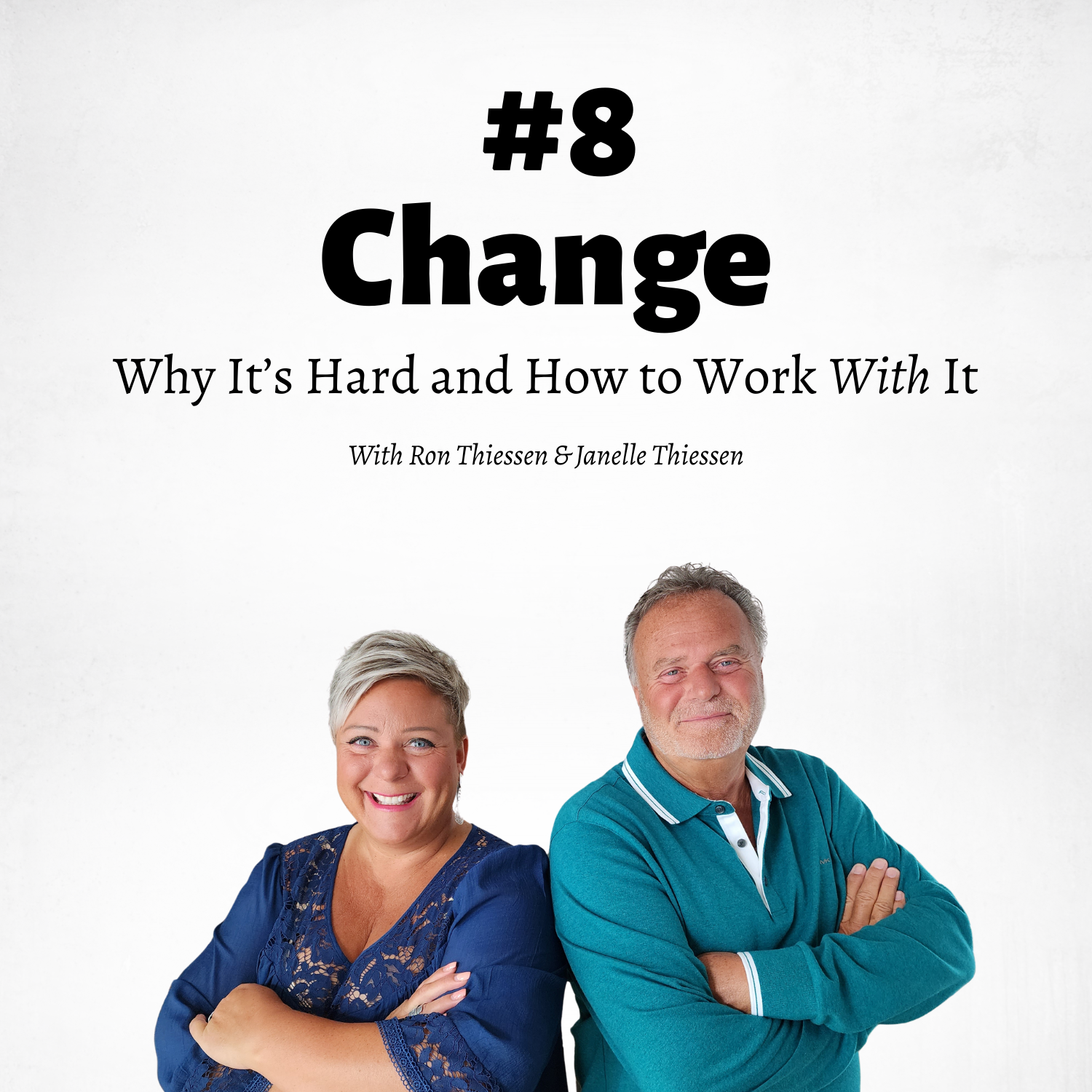
“Change is not a threat, it’s an opportunity. Survival is not the goal. Transformative success is.”
Change is unavoidable. Sometimes it arrives loudly—through career shifts, relationship changes, health challenges, or loss. Other times it sneaks in quietly, showing up as restlessness, repeated frustration, or the subtle sense that something in your life no longer fits.
In this session, we talk about what change actually asks of us, why we often resist it even when we want it, and how to approach it in ways that are sustainable, compassionate, and real. Change isn’t about flipping a switch. It’s about evolving—slowly, honestly, and with intention.
What Change Really Is (and Why It Feels Personal)
When we say we want change, we often imagine external improvements: different circumstances, better outcomes, fewer problems. But real change asks for something deeper.
Change doesn’t just alter what’s happening around you—it requires you to become a slightly different version of yourself. And that’s why it can feel unsettling. It challenges familiar routines, long-held identities, and the stories you’ve been telling yourself about who you are.
✍️ Reflection
What change has been quietly asking for your attention lately?
If that change were successful, what might be different about you?
Why Change Is So Hard (Even When We Want It)
Our brains are wired for familiarity. Patterns feel safe—even when they’re uncomfortable. Growth introduces uncertainty, and uncertainty often triggers resistance.
Two common traps tend to derail change early:
We underestimate the cost, assuming the change will automatically solve the problem.
We aim too big, too fast, making commitments that feel motivating but aren’t sustainable.
🧪 Mini Experiment
Instead of asking “What big change should I make?”, try this:
What is the smallest version of this change I could try this week?
What would feel doable—not heroic?
Letting Go of the “Big Turn”
Many of us imagine change as a dramatic pivot—a sudden overhaul that fixes everything at once. But forced turns often snap back to old patterns.
Lasting change usually happens through gentle pivots: small, consistent shifts that slowly reorient your life. These shifts may feel unremarkable in the moment, but over time, they add up.
✍️ Reflection
Where have you tried to force a big change in the past?
What might a gentler pivot look like instead?
Resistance Is Part of the Process
Resistance isn’t a sign that something is wrong—it’s information. Even when change aligns with what you want, some part of you will push back.
Resistance often shows up as procrastination, guilt, overthinking, or chronic frustration with things you feel unable to control. Sometimes we stay stuck not because we don’t want to change, but because we feel guilty for needing to.
✍️ Reflection
What form does resistance take for you?
Is there guilt attached to this change? Where might that have come from?
Why Experiments Work Better Than Promises
Big promises carry pressure. Experiments invite curiosity.
When you treat change as something to test rather than prove, the emotional stakes drop. You’re no longer trying to succeed—you’re trying to learn. That shift alone makes change more approachable.
🧪 Try This
Choose one change you’ve been avoiding and run a 7-day experiment:
Keep it small
Make it reversible
Focus on learning, not winning
Afterward, ask:
What did I notice?
What surprised me?
What would I adjust if I tried again?
Why We Get Stuck (Even When We’re Trying)
Sometimes we genuinely want change—but behave in ways that keep things the same. This often happens because of a hidden competing commitment.
For example, you might want to speak up more, but also be deeply committed to avoiding embarrassment. Until that underlying belief is surfaced and questioned, the change can’t stick.
✍️ Reflection
What might I be protecting myself from by staying the same?
What assumption would need to be questioned for this change to move forward?
Reframing the Change
Sometimes nothing about the situation needs to change—only how we relate to it.
A shift in perspective can transform an experience without altering the external facts. When you change how you interpret a situation, your emotional response often follows.
🧭 Practice
Before resisting a change, ask:
What benefit might I be overlooking?
How would this feel if I focused on what I’m gaining rather than what I’m losing?
Building Proof, Not Pressure
Change becomes sustainable when you begin to trust yourself again.
Small, kept commitments build identity. Each time you follow through, you reinforce the belief that you can rely on yourself. Momentum grows from consistency, not intensity.
✍️ Reflection
What’s one small commitment I know I can keep?
How might honoring that commitment shift how I see myself?
Final Thoughts: Be Gentle With the Process
Change doesn’t happen all at once—and it doesn’t happen just because we want it to. It unfolds through honesty, experimentation, reframing, and the courage to evolve in small, steady ways.
You don’t have to rush. You don’t have to get it perfect. You have time to experiment, adjust, and grow.
And that, in itself, is a hopeful place to begin.